A split system AC part replacement checklist works through both halves of your system, the indoor air handler and the outdoor condenser, before anyone touches a wrench, because a failing part rarely fails on its own. Replace just the piece that finally quit and skip everything around it, and you could be booking a second visit before the season's over.
That strain adds up more than most homeowners expect. The U.S. Department of Energy notes that something as small as a dirty filter can push energy use up by 5 to 15 percent, since restricted airflow forces the blower and compressor to work harder for the same result.
That's why our technicians don't just swap the failed part and move on.We test what's around it too, so you're not paying for the same repair twice. Here's what to check in both units before your next one.
Key Takeaways
- A split system AC part replacement checklist covers both the indoor air handler and outdoor condenser, since a failing part almost always puts stress on the components around it before it actually fails.
- Inside, check the air filter, evaporator coil, blower motor and capacitor, condensate drain line, and electrical connections before any part is ordered.
- Outside, check the capacitor and contactor together, inspect the condenser coil and fins, confirm refrigerant levels, and rule out a false compressor diagnosis before replacing one.
- Parts that fail together, like a blower motor and its capacitor, or a contactor and capacitor, should be tested and replaced as a pair to avoid a second repair visit.
- Low refrigerant is almost always a sign of a leak, not gradual loss, so the leak should be found and repaired rather than just topped off.
- Ask for written documentation on any repair, including the part replaced, the reason, and before-and-after readings, so future service calls have a clear starting point.
Why a Split AC Part Replacement Checklist Matters Before Any Repair
Skipping a checklist before a repair means you're guessing instead of diagnosing. Split AC systems are interdependent, so a problem in one part rarely stays contained to that part. A checklist matters because it:
- Catches related wear before it causes a second failure, like a capacitor that's been overworking a blower motor for weeks before either one gets flagged.
- Flags strain that's already spreading, like a clogged filter quietly overheating an evaporator coil long before anyone notices.
- Confirms what actually caused the failure, instead of replacing the symptom and leaving the underlying issue in place.
- Prevents a repeat repair, since replacing only the part that quit and skipping what's around it often means the same failure shows up again within months.
- Gives you a written scope of work before anything gets replaced, so you know what was found and why each repair is being recommended.
It's part of why our technicians check the surrounding parts on every service call, not just the one that failed.
Indoor Unit Inspection Checklist: What to Check Before Any Repair
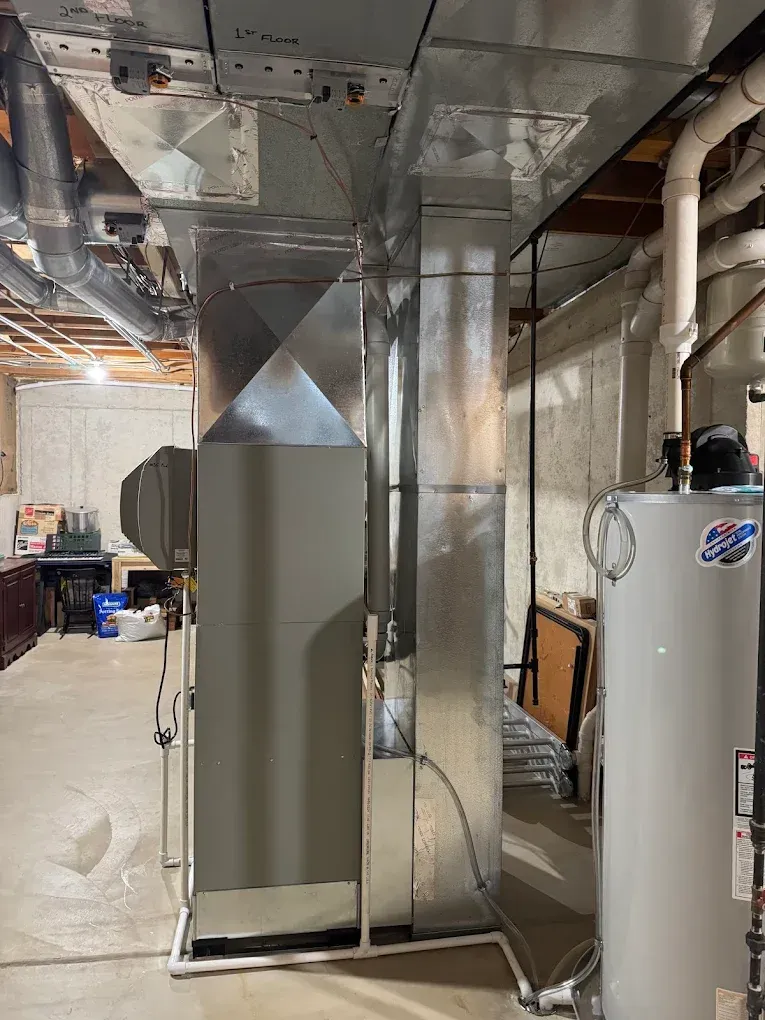
Before any part inside your air handler gets replaced, work through this list first.
| Component |
What to Check |
Why It Matters |
| Air filter |
Replace if dirty or collapsed, then measure airflow at the supply registers |
A restricted filter is the leading cause of strain on everything downstream, including the blower motor and coil |
| Evaporator coil |
Look for ice buildup, dirt accumulation, or bent fins |
A frozen or dirty coil restricts airflow and can drive up refrigerant pressure enough to damage the compressor |
| Blower motor and capacitor |
Test the capacitor's reading whenever the blower motor is being replaced |
These two fail together often enough that testing both at once saves a second visit |
| Condensate drain line |
Flush with a wet/dry vacuum or condensate tablets, and check the float switch |
A clogged line backs water into the drain pan, which can overflow into drywall, insulation, or flooring |
| Electrical connections and wiring |
Inspect and tighten terminals, and document any heat discoloration or fraying |
Loose or corroded connections cause intermittent failures that are hard to trace later |
Our technicians run through this list on every indoor service call, whether the job is a filter swap or a blower motor replacement. Once the indoor unit is cleared, the outdoor condenser gets the same treatment next.
Outdoor Unit Inspection Checklist: What to Check Before Any Repair
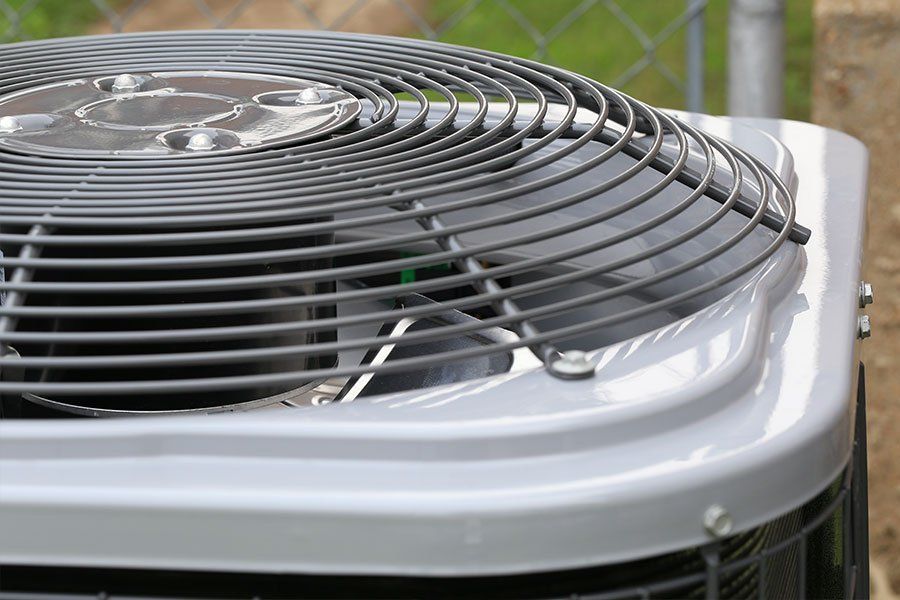
Before replacing anything on the condenser, work through this list.
| Component |
What to Check |
Why It Matters |
| Capacitor and contactor |
Test both with a meter, even if only one is being replaced |
A contactor with pitted or burned contacts will struggle to start the compressor even after a new capacitor goes in |
| Condenser coil and fins |
Clear debris, confirm clearance on all four sides, and straighten bent fins with a fin comb |
Blocked airflow raises head pressure and can overheat the compressor |
| Refrigerant levels |
Measure with gauges any time the refrigerant circuit or compressor is involved |
Low refrigerant is almost always a sign of a leak, not gradual loss, so recharging without finding the leak just means it happens again |
| Compressor |
Run a full electrical test, including a megohm test on the windings, before replacing |
Confirms the compressor actually failed rather than being locked out by a bad capacitor or contactor, since a mistaken replacement is a costly error |
| Disconnect and wiring |
Test fuses with a meter and check for UV or heat damage near the contactor terminals |
Fuses stressed by a failing component can look intact but test weak |
Refrigerant deserves its own note. The EPA prohibits knowingly venting refrigerant during any repair, so a technician should always recover it rather than release it into the air. Finding and repairing the leak before recharging is standard practice for a fix that actually lasts, since adding refrigerant without addressing the leak just means it escapes again and the compressor eventually fails from running low.
This is one step we won't skip: testing for a leak before anything gets added back to the system, since a top-off alone rarely holds. With both units checked, the table below pulls the most common part replacements together into one quick reference.
Which AC Parts Fail Together? A Quick Replacement Reference
Once you know which part failed, this table shows what else is worth checking at the same time, since these are the pairings that most often lead to a second service call when only one side gets replaced.
| Part |
Common Failure Sign |
Check at the Same Time |
| Run Capacitor (indoor) |
Blower motor not starting or running slowly |
Blower motor windings, electrical connections |
| Run Capacitor (outdoor) |
Compressor or fan motor won't start |
Contactor, disconnect fuses |
| Contactor |
System won't turn on or hums without starting |
Capacitor, low-voltage thermostat wiring |
| Blower Motor |
No airflow or weak airflow indoors |
Air filter, indoor capacitor, evaporator coil |
| Condenser Fan Motor |
Outdoor fan not spinning, unit overheating |
Capacitor, condenser coil condition |
| Compressor |
No cooling, tripping breaker, locked rotor |
Capacitor, contactor, refrigerant level, wiring |
| Condensate Drain Line |
Water overflow, system shutting off |
Float switch, drain pan, coil cleanliness |
Keep this table handy during any service call. The third column is the part of the job that actually prevents a repeat visit, not the part that gets skipped when time is tight.
When to Schedule a Pre-Season Inspection for Your Split AC System
Local climate shapes how these parts wear, and the timing that works well in one region can miss the window somewhere else. Cold winters put outdoor units through repeated freeze-thaw cycles, which can speed up corrosion on electrical contacts and wiring insulation. A heavy pollen season in spring clogs condenser coils faster than in areas with less tree cover.
Around Elgin, that means scheduling an inspection in April or early May, ahead of the first real stretch of hot weather, gives a technician time to catch a weak capacitor, a dirty coil, or corroded wiring before you need the system on a 95-degree day.
What Good AC Repair Documentation Should Include
A written record after any repair should list the part that was replaced, the reason it failed, and the readings taken before and after, things like capacitance, refrigerant pressures, and amperage draw. It should also flag anything noticed during the visit that's worth watching, even if it wasn't part of that day's repair.
If you're not getting that level of detail, ask for it. It's what turns a repair invoice into something useful the next time a technician is standing in front of your system, whether that's us or someone else.
Getting Your Split AC Repair Right the First Time
A split system AC part replacement checklist gives you a repair that actually holds, instead of one you'll be paying for twice. Skipping a check on the parts next to the one that failed is how a small capacitor replacement turns into a compressor job a few weeks later. Work through both the indoor and outdoor lists, confirm what caused the failure before ordering parts, and keep the documentation that comes with it.
If your system is showing signs of trouble, Climate Control Services can walk you through a repair built to last. As a family-owned company that's served Elgin and the surrounding Fox Valley area for over 25 years, we bring that same checklist to every AC repair call, along with the rest of our HVAC services. Call (630) 906-9768 or contact us to schedule a visit.
Frequently Asked Questions
What is a split system AC part replacement checklist and why do I need one?
A split system AC part replacement checklist is a structured list of components to inspect and test before and during any AC repair. Split AC systems have interconnected parts, so when one fails, it often weakens others nearby, and a checklist catches that before it causes a second repair.
How do I know if my AC capacitor and contactor need to be replaced at the same time?
Your capacitor and contactor should both be tested with a meter during any outdoor repair. If the capacitor reads low on capacitance or the contactor shows pitted or burned contacts, replace both together, since worn ones tend to take each other down within the same season.
Can a dirty air filter cause other AC components to fail?
A dirty air filter can cause other AC components to fail. Restricted airflow makes the blower motor run hotter, can freeze the evaporator coil, and forces the compressor to work harder. In Elgin, heavy spring pollen makes this worth checking between April and June.
How often should I have my split AC system inspected before a part fails?
A split AC system should be inspected at least once a year, ideally in April or early May before cooling season starts. That gives a technician time to catch a worn capacitor, low refrigerant, or a dirty coil before it fails on a hot day. Our A/C tune-up guide covers what that seasonal visit should include.
What should be included in documentation after an AC repair?
Documentation after an AC repair should include the part replaced, the reason why, and the before-and-after readings, such as capacitance and refrigerant pressures. We include this on every repair so you have a clear record for next time, the same approach covered in our guide to home maintenance.
Is low refrigerant always caused by a leak in a split AC system?
Low refrigerant in a split AC system is almost always caused by a leak, not natural depletion. Adding refrigerant without repairing the leak just means it escapes again, and the EPA prohibits venting refrigerant during service, so a technician should find and fix the leak rather than just top it off.
What parts in a split AC system wear out together and should be replaced at the same time?
The outdoor run capacitor and contactor are the most common pair. Indoors, the blower motor and its capacitor often fail in sequence, and the condensate drain line, float switch, and drain pan should be checked as a group. The reference table earlier in this post covers the rest.